
Paul II
or how terrible things started and where they wound up

For some reason, last month I proclaimed that I wouldn’t use Wikipedia to research Paul - the historical figure, the apostle, and the reason there is a difference between Judaism and Christianity. Why was not using Wikipedia important to me? I don’t know. I thought maybe God would slide a cosmic Paul-related reference, text, or signpost in my direction. Sadly, I kept reading Q (it is LONG) and didn’t get any divine whispers about Paul.
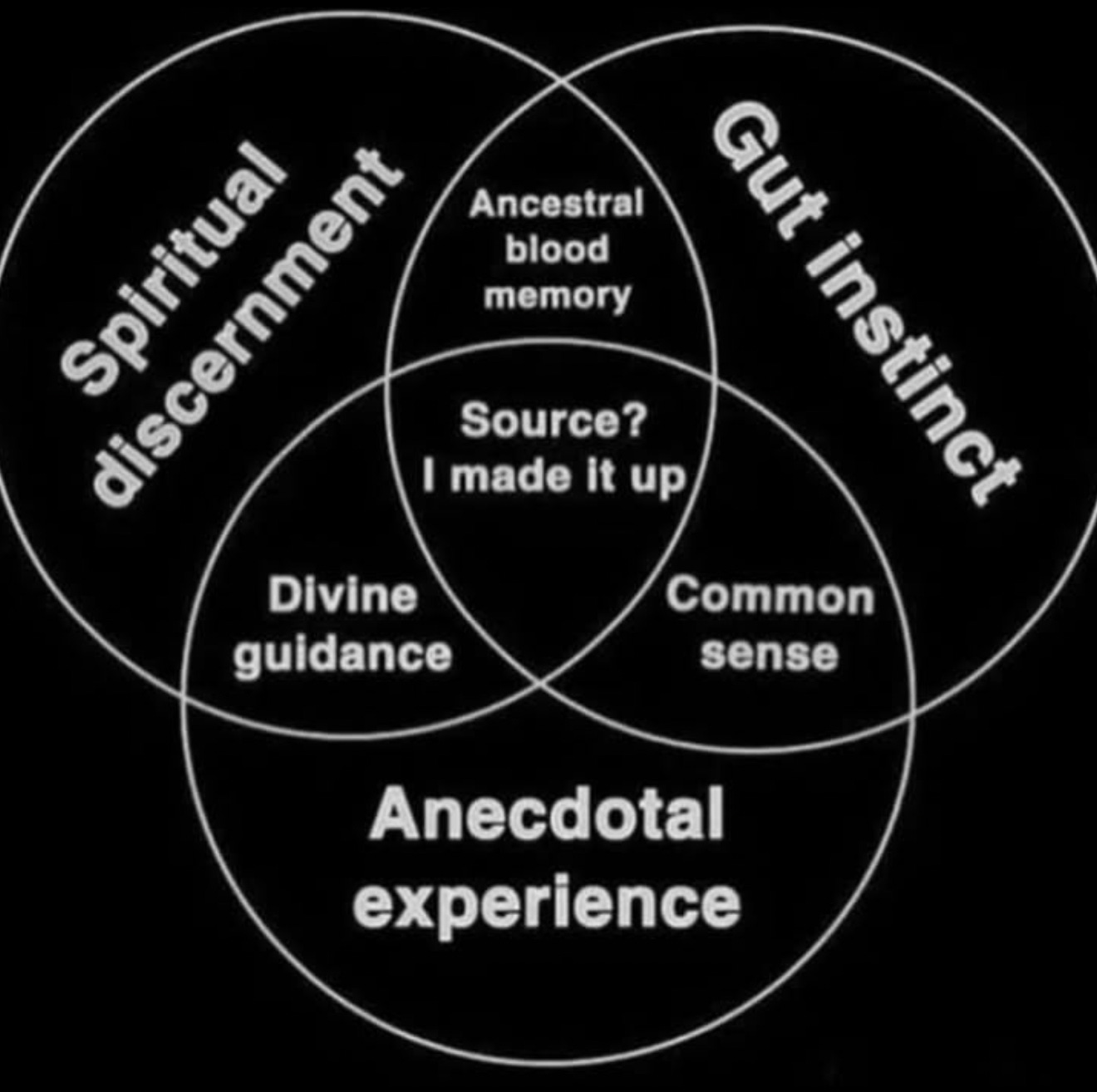
So instead of Wiki, I read through the encyclopediabrittanica.com entry about the apostle Paul. It was super interesting; I have summarized it for you below, adding a few flavorful opinions and bible passages along the way. But let the record show that 1) God works in mysterious ways and 2) there is nothing wrong with Wikipedia and although it’s good to switch it up sometimes I honestly love that there is a reliable place on the internet that I can use to look shit up for free.
I am also releasing a few paragraphs from my manuscript, entitled LAMB. The reason I am researching Paul the apostle is because I took his name for one of the characters in LAMB, and it felt weird to not share some of the context. Also, I put a lot of annoucements are down at the bottom — fall is always a busy time!
Anyways, I hope you enjoy!
I invite you to enter this story as if it were the beginning of a romance novel about a passionate celibate who loved only one man, Jesus the Christ. The landscape is verdant and warm. Gusts of hot wind occasionally cause his tunic to flutter open, revealing delicate yet reliable collarbones.
Our young man is a tent-maker by trade. Strapped to his back are a few tools, a roll of leather, and a few coils of rope. He is not aristocratic, but also thinks it’s cool that he works with his hands, so he can’t be totally working class either. It is the year 35 ace, approximately. He is on the road to Damascus. He is probably mulling angrily about the rate at which his fellow Jews were turning toward Jesus. Until now, the young man who would come to be known as the apostle Paul, has made it his duty to personally persecute converts to Christianity.
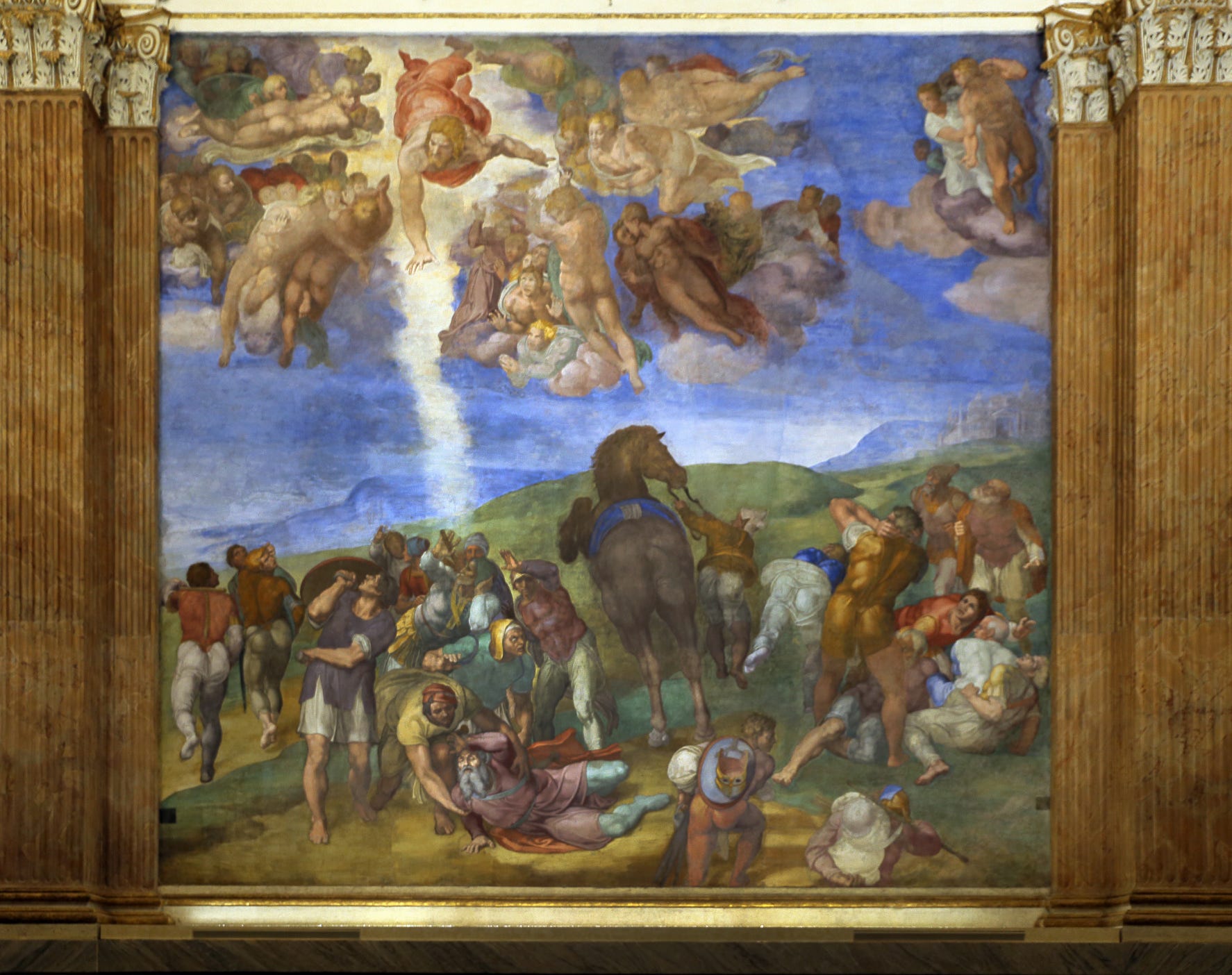
A bright light stops him in his tracks. It is Jesus. Jesus asks him “why do you persecute me?” Jesus explains that he is the khristós, which in a common ancient Greek dialect called Koine means the messiah. Paul becomes blind for three days, and when his vision is restored and the scales have fallen from his eyes, Paul’s life will never be the same again. He will devote the rest of his life to converting as many people as possible to the new faith. You can read this part of the story in full in the Bible, in the book of Acts, chapter 9.
Like I said last month, some Jews would have been seduced by the way the Christian message flipped power on its head, especially since Jewish law was quite rule-heavy. What New Yorker writer Adam Gopnik called the “reversal of worldly expectations” is exemplified in the second letter to the Corinthians, where Paul says, “For Christ’s sake, I delight in weaknesses, in insults, in hardships, in persecutions, in difficulties. For when I am weak, then I am strong.” Indeed, the irrationality of this worldview is the miracle that is so seductive for Paul. But that’s not the only seduction, there’s also the promise of everlasting life.
Aside from the Jews, Paul tried to convert the gentiles, who worshipped a variety of polytheistic Pagan religions and traditions with varying degrees of similarity to greek Gods like Aphrodite or Dionysus. The pagans were not easy to convert because their traditions were fun, local, seasonal, and communal. They didn’t want to be Jewish and they didn’t have a reason to stop being Pagan. Paul’s case was a weak one because what he was preaching didn’t exist yet. It didn’t have a name. He basically had to convince them to be nothing – nothing, as in, not a known thing.
Plus his platform was not the hottest: give up idolatrous worship and the festivities and communality I mentioned. Also, give up having sex for fun, especially with sex workers and in homosexual ways. Paul was VERY into celibacy. He only loved Jesus.
So why, you may wonder, would anybody listen to him? Because he promised eternal life, and because Paul persuasive in that quiet, frightening kind of way. He wasn’t a fiery preacher; he travelled from town to town making tents, and people would drop by while he worked and would listen to what he was saying.
Paul and Jesus were contemporaries, but they did not know each other. Paul converted right after Jesus died. Probably because Jesus’ death was fresh in his memory, Paul fully expected that Jesus was going to come again in his lifetime. He was anxious about being prepared for it, about being ready, and was fixated on the glory of this event and on eternal life. He proclaimed that everyone who loved Jesus would be saved, raised from the dead. Some people think he meant it literally, as in the dead in Christ would be raised (1 Corinthians 15:51-52) and meet the living in the air (1 Thessalonians 4:15-17).

It is an understatement to say that Paul loved Jesus. Jesus blinded Paul and then restored his sight. Paul said, “To live is Christ and to die is gain.” My dear friend Nikima would say “that sounds like an abusive relationship” and I think we can all agree. Paul was passionate, an ethical absolutist, an extremist in every way. Remember that the first part of his life was spent doing the exact opposite of the second half of his life? Paul is giving unhinged virgo.
Paul spent his life on this herculean task, and I hope it is clear to you that he was up against a lot. I don’t say it to inspire compassion for Paul, rather to contextualize the political backdrop of his letters. He was throwing himself at the rhetorical challenge that would have been converting the Pagans/gentiles, but also trying to convince the Jews who believed in Jesus that the Gentiles could worship Jesus with the Jews without being circumcised, aka without converting to Judaism first.
We know about Paul because of all his letters, which make up 13 of the books in the New Testament – about half. And because Paul was up against so much, his letters are often aggressive, lambasting, and vehemently oppose the status quo at the time. Because the letters are trying to establish a new value system and convince the opposition, they are useful to anyone who wishes to use the bible against their opponents.
When Paul wasn’t so very concerned with being ready for the end of the world, he was busy grappling with what would turn into core theological questions. For one, he solidified the familial relationship between the God the father and Jesus the son, between the human and the divine. More interestingly, he thought about the body of Christ as a mystical phenomenon, because in Christ’s death his body became our body. Paul underlined how Christians everywhere constitute the body of Christ, which is why we should take care of our body.
Paul took the idea of Christians being the body of Christ, which I think it a pretty cool metaphysical idea, and in true toxic style he followed this line of thought to the conclusion that Christians shouldn’t have sex in homosexual ways, with sex workers, or not any non-reproductive purposes.
Paul did not love women, “It is good for a man not to touch a woman” (1 Corinthians 7:1) (okay dude nobody said you had to…). Paul loved Jesus. Jesus loved sex workers. I don’t get it either. What is clear is that Paul’s letters speak a LOT about sex, homosexuality, sex work, and the reproductive function of marriage, and as you might rightly assume, they have probably been some of the most damaging parts of the Bible for women and queers and maybe everybody for the past couple of millennia. It’s because of Paul that the Catholics have this tiered system of the clergy who do not have sex and the rest of us who do, an idea which went unchallenged for approximately one thousand five hundred years, or until the protestant revolutions.

Why am I interested in Paul? I had an influential dance teacher who, among others, is one of the reasons I am in this field. He was always going on about how nobody is dancing in Berlin. He died in 2021. I put him in my book and named him Paul. I wanted to make him more of a dance fanatic, a prophet of some because a friend told me that the prophet is the one who speaks out of time. Here are a couple paragraphs from the first chapter of LAMB about Paul:
Paul was a short fairy, bald, in his sixties, with mischievous eyes, whose belongings fit in a pink backpack. He carried himself with humility and took well to being admired. Paul’s modern dance piece, which he choreographed on 5 dancers, was called Take 5 and was set to the music “Take 5” by the Dave Brubeck Quartet. The costumes were men’s dress shirts, men’s dress shorts, and suspenders. Paul was exigent about how we executed the movements, but he was never mean. He was inspired; we bonded.
When I moved to Berlin, Paul lived there too. A handful of people were in the habit of having lunch with him, once or twice a year. I dreaded these lunches, but I thought about lonely cranky old Paul, and I went. Usually, I enjoyed it more than I thought I would. A few months would pass until the next text message, and we would take it again from the top.
He was a vegetarian. He liked to eat at the vegetarian place “W” on Kastanienallee, as well as the vegetarian deli “Seerose,” which has a branch at Südstern and another one on Mehringdamm, unless it has closed. Over carrot salad and spinach ravioli, I would update him on how my dance career was going, and he would disparage other men’s weight and sigh that they would never live up to their potential.
Sometimes I invited him to the theater, but he always declined. His excuse was that “nobody is dancing,” and as he stressed the first syllable of DAN-cing, his Indiana accent puckering, his eyes, pregnant with hurt and disgust, fixed mine. Why go to the theater if nobody is dancing? Someday soon he would found his all-male modern dance company. All he needed was to follow up with a rich man in Vienna who said he was interested, but that wasn’t the point really. What outraged him was that it hadn’t happened on its own, because nobody was dancing.
He was riding his bike when he was hit by a car on January 8th 2021. It happened in his neighborhood of 15 years, Moabit. During a three-week coma, the German police contacted the Belgian authorities looking for Paul’s friends or family and ended up finding me. I called my college bestie Shade, and the handful of people who were in the habit of having lunch with him.
A ballet teacher, whose class he had attended religiously, already knew about it. She hung a bird feeder outside Paul’s hospital window so that he could watch them when he came out of the coma. She said she saw his eyes dancing, but he was on a ventilator and couldn’t speak, and was paralyzed from the neck down. When he died a few weeks later, she gathered money to inscribe his name on a bench that looks out over a field on the Insel des Jugends, where he liked to go for a stroll.
Announcements:
~ Tonight is the premiere of Mira Fuchs (a reprise) and it is pure joy to be working as a dramaturg on the revival of this project. When I first saw the show, it was in 2015. I was paying 300 euros in rent, I had just started dancing for Tino Sehgal, and I was neck deep in what would be my last and most toxic heterosexual relationship. For all of us who have been around for the past decade or so, it is a gift to be able to see how much has changed. For those of you who are encountering this work for the first time, I am just really happy for you. Melanie Jame Wolf gets an opportunity to time travel through this show – you can watch her watch herself from ten years ago watching herself from twenty-ish years ago. This mise-en-abîme of performative iterations is SO satisfying; you experience how seasoned a performer she is. I hope our community and the scene(s) we work in can continue to make it possible for artists to be as oil-and-salted as she is.

~ MJ and I will head to a residency at O Espaco do Tempo in Portugal soon to develop her new project, Finite Jest, as well as to work on our individual writing projects. I will be developing my contribution to the commission I have with Lesbianas Concentradas for their upcoming series called DRAMA.
~ On Saturday I am going to watch Dylan Kerr do their Solo for Breath at 20h at Hours, on Lucy-Lameck-Str. Lesbianas Concentradas produced a zine with someone else who is involved in the show, named Yanne Horas. Should be good.
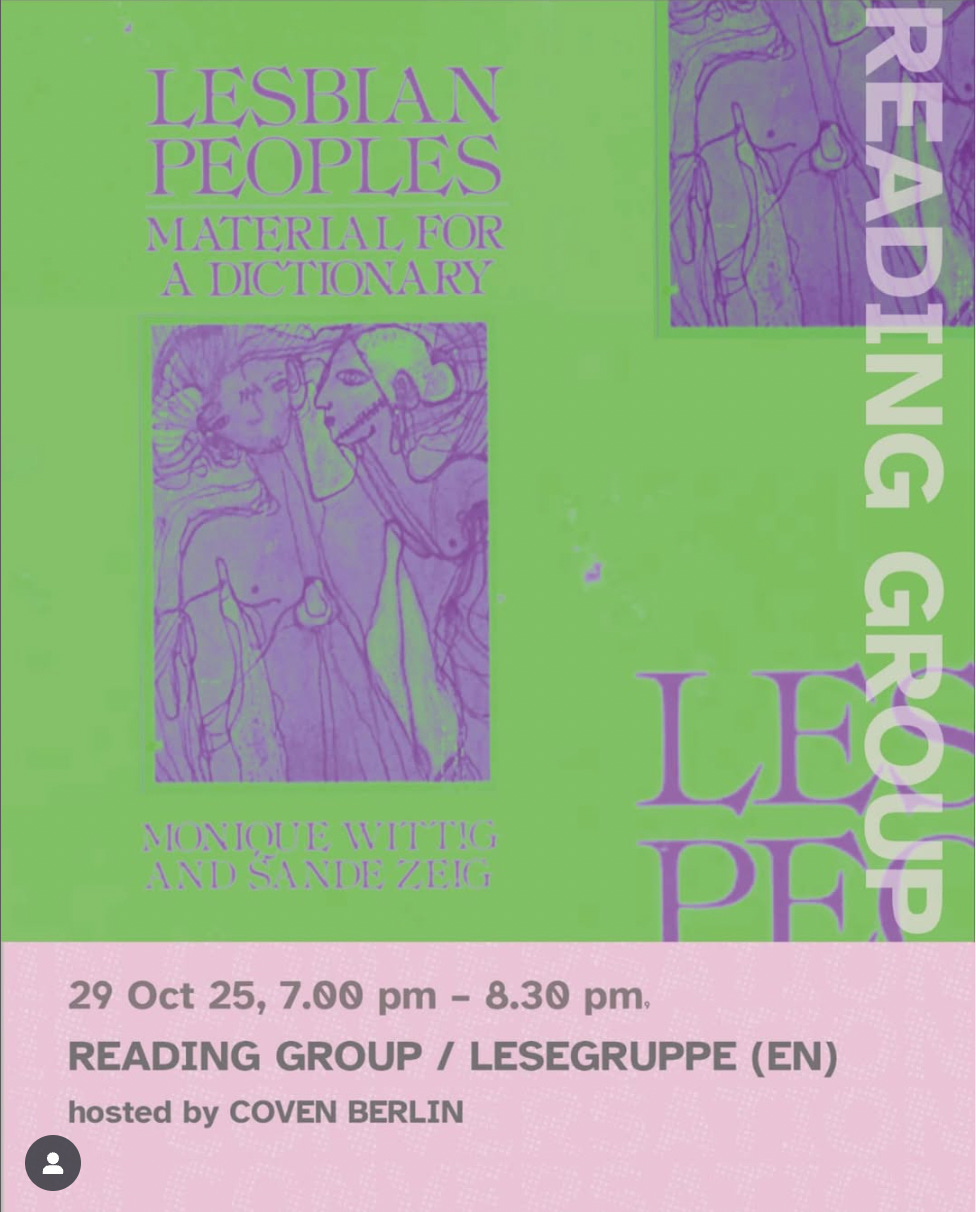
~ COVEN BERLIN is doing a little reading group at Galerie im Turm on the 29th at 7-8:30 pm. It’s so good to get back together with my friends from COVEN :) Here is the blurb:
„Lesbian Peoples: a Reading Group with COVEN BERLIN“ 🫀📕
We will be reading from Lesbian Peoples: Material for a Dictionary by Monique Wittig and Sande Zeig (1979).
You don’t need to have read or to be familiar with the book; we will provide printouts of the material, and read excerpts aloud during the event. The goal of our reading groups is to come together to enjoy the pleasure and process of reading aloud to one another in a low-stakes, approachable, drop-in format.
Rehearsals with Sheena McGrandles on TOIL, a ballet about work, are going well. It is an honor to witness such devoted dancers develop such a physical dance. Whenever I am in the studio I feel so grateful that dance is in my life still. We premiere in early December – I’ll give you a head’s up.
And lastly, the show I am dancing in, choreographed by Francesca Ferrari, just had its first week of work in Vienna. I am very excited about this show! Sadly for Berlin, the premiere will be in Vienna in January. But will do a showing in November 22nd and 23rd at PSR Heizhaus if you want to come by!
Thanks for reading!